
The Sacred Diagram
The Shri Yantra, explained simply
Revered in the Sri Vidya tradition as the visual form of the Divine Mother, the Shri Yantra is considered the most auspicious of all yantras — a geometric key to abundance, clarity and inner balance.
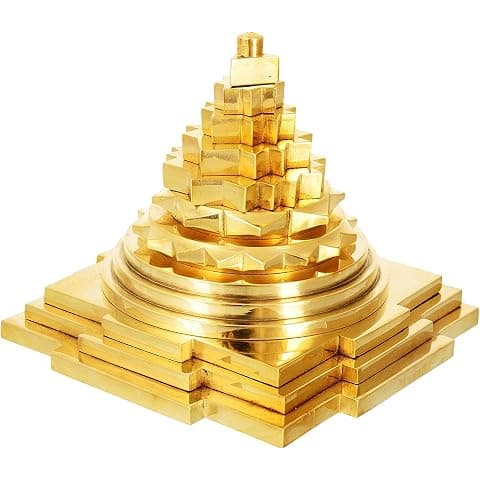
The Geometry
Nine triangles, forty-three worlds
Four upward triangles represent Shiva, the still consciousness. Five downward triangles represent Shakti, the creative energy. Their union generates 43 smaller triangles, framed by two rings of lotus petals and a square bhupura with four gates.
In the Maha Meru form, this plan is lifted into three dimensions — nine rising levels, one for each enclosure (avarana), with the bindu, the point of origin, at the very top. Traditional shilpis file each tier by hand so the bindu sits exactly above the centre of the base.
Placement & Vastu
Where to keep your Yantra
Direction matters less than sincerity — but these are the traditional recommendations.
Home Mandir
North-East (Ishaan) corner, on a raised platform, facing West so you face East while praying.
Business / Shop
In the cash box, locker, or on the counter to your left. Never behind your seat.
Office Desk
Front-left of the desk, clutter-free, where morning light can reach it.
Care & Energising
Keeping the Yantra alive
First establishment
On a Friday morning, bathe the Yantra with raw milk, then clean water, and wipe it dry. Place it on a red or yellow cloth, offer kumkum, rice, a flower and a ghee lamp, and invoke Lakshmi with the beej mantra 108 times.
Daily
Light a lamp or incense, offer a fresh flower, and spend a minute with your gaze resting on the bindu at the summit.
Cleaning brass & gold-plated
Wipe with a soft dry cloth. For brass, an occasional lemon-and-salt rub restores shine; never use abrasives on gold plating.
Cleaning sphatik crystal
Rinse under running water and leave in indirect moonlight overnight once a month.
Re-energising
Repeat the milk-and-water bath and mantra jaap once a year, ideally on Dhanteras or Akshaya Tritiya.